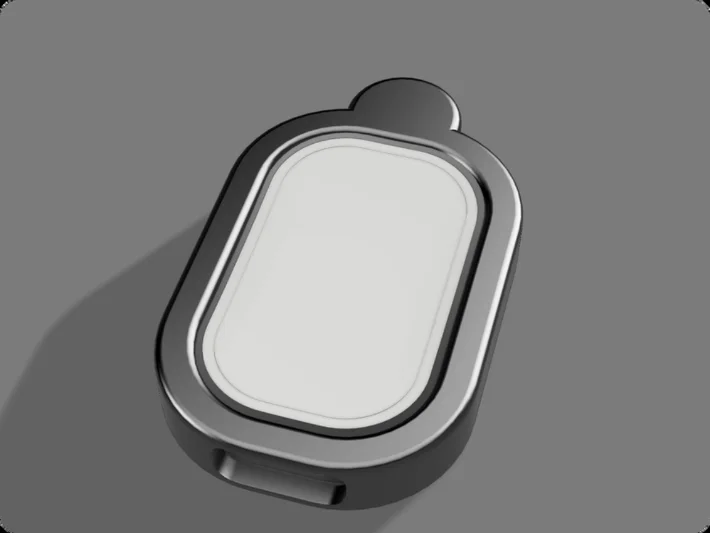
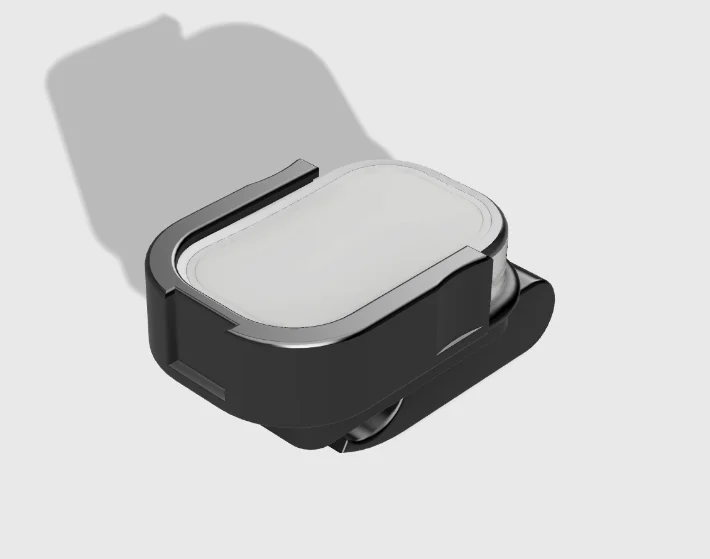
Carrier 1, recommended default
Neck pendant
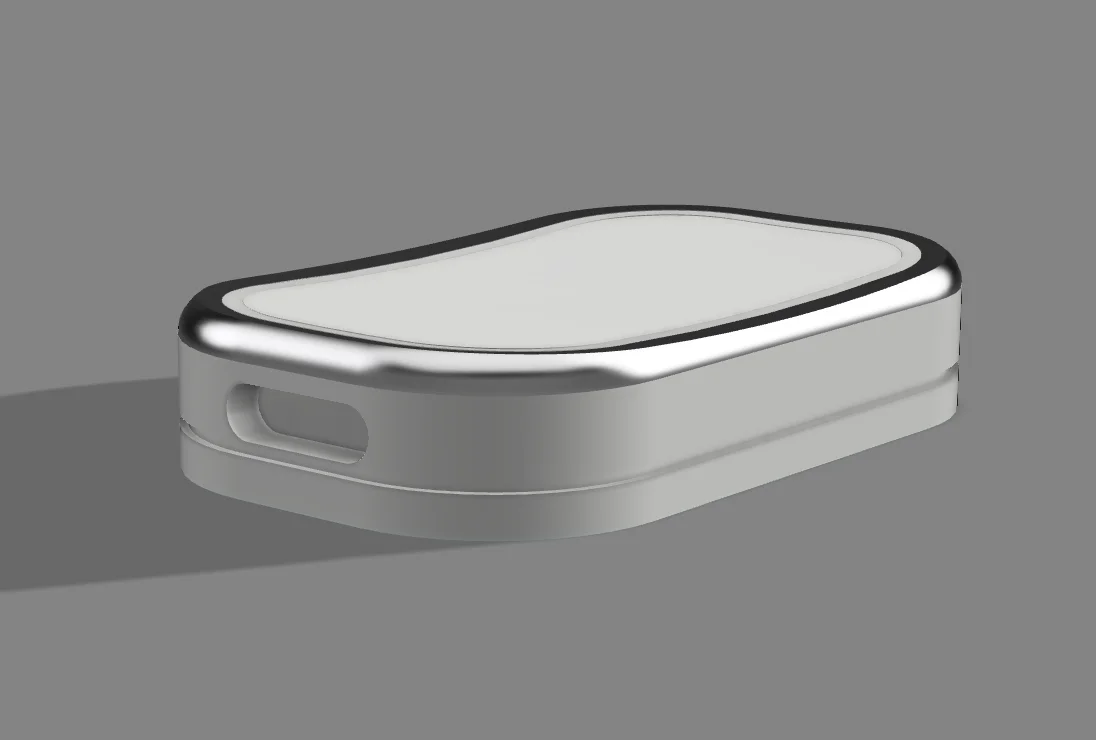
Brushed stainless bezel with an open window, so nothing crops the LED ring. Filleted breakaway loop, and a USB-C cutout so the device never comes out to charge.
An emergency alert pendant for independent living residents, designed to read as jewelry instead of medical hardware. My summer was spent on the research, the form, and the CAD that got it there.
An outdoor-going independent living resident needs the device to read as a part of who they already are, because when it reads as medical or institutional, it competes with the identity that gets them out the door in the first place.
Four insights from week one of interviews and competitive research that set the direction for everything after.
01
Residents want to feel safe with a pendant, but independent living residents prioritize comfort, and that pulls compliance down.
02
Caregivers have enough on their plates. Monitoring device battery life feels like a task that detracts from more pressing work.
03
Agency lives in the carrier. Necklace versus belt clip versus wristband hands the decision back to the resident.
04
Residents want assurance the alert was heard, but no screen and no two-way voice means haptics and LED are the proof that someone has got them.
Increasing compliance through aesthetics
Subtle and slick, because comfort is compliance.
Let them make it theirs
The dignity of choice, interchangeable bands and carriers.
Minimal interference for non-wearers
No routine maintenance for the staff who do not wear it.
Close the loop so they feel heard
Instant confirmation, achievable without a screen.
One device, two opposite bosses
Facilities differ: off property is not my problem, versus I want to know everything.
Casual interviews
Family and friends, plus reviewing prior resident interviews.
Competitive research
Sentrics, Sage, Securitas, Rythmos, and fitness wearables.
Principles
A point of view statement and design principles.
Form
Sketches, then parametric CAD in Fusion.
Validation
Interview at Newcastle Place with clinical leadership.
Review
Design review, then the final recommendation.
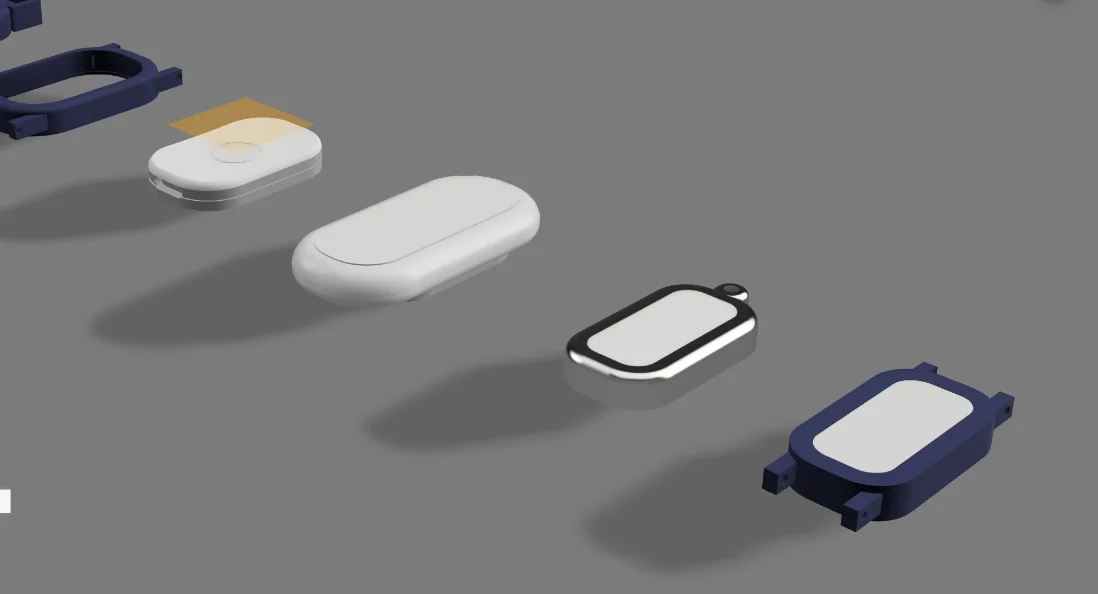
One certified core at 40 by 25 by 8 mm, with no screen. Every decision below earns its place on a device this small.
Soft SOS button
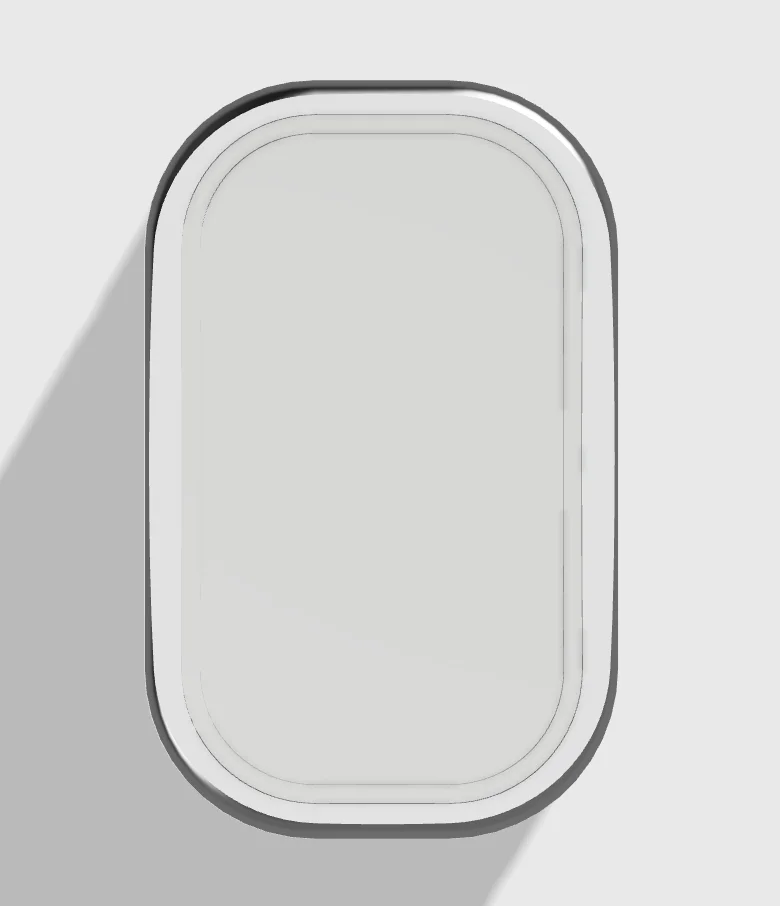
The whole concave silicone face presses, so there is no target to find.
Status LED ring
A full translucent ring that fills progressively during the hold.
Piezo buzzer
Audible confirmation, toggleable per device.
Sealed USB-C
On the short end, so it charges while seated inside its carrier.
QR and NFC on the back
An electronic ID for a stranger helping a lost resident.
No screen
Saves twelve dollars a unit, and serves aging eyes better.
Residents may have impaired vision, impaired hearing, or reduced sensation, so confirmation has to arrive three ways at once.
A buzz the moment the alert leaves the device. Works with impaired sight and hearing both.
Sized deliberately large, because a small indicator light means nothing to aging eyes.
Well past the loudness of a classic buzzer, and toggleable for residents who do not want it.
“You really need something that they can feel to know what’s activated, something that they can see, and a sound mechanism as well. Then you would cover the main deficits that you see in the senior population.”
Accidental activations are not the real problem. The real problem is the alert that should have fired and did not, because the resident forgot they had to hold. So the design target became legibility.
0.0 s
Press registers. The ring wakes with one soft buzz.
0.5 s
A third of the ring is lit. Keep holding.
1.0 s
Two thirds lit. The resident can see it counting.
1.5 s
Ring completes, buzz and tone. Help is called.
The hold dropped from three seconds to 1.5, with a per-device toggle for instant press for residents who cannot manage a hold at all. The LED ring fills progressively so the wait is visible while it happens, then completion is confirmed three ways.
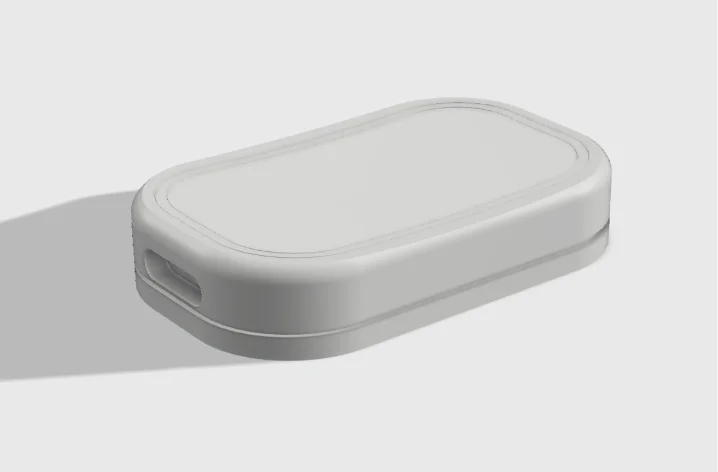
Standard
Soft-touch polycarbonate.
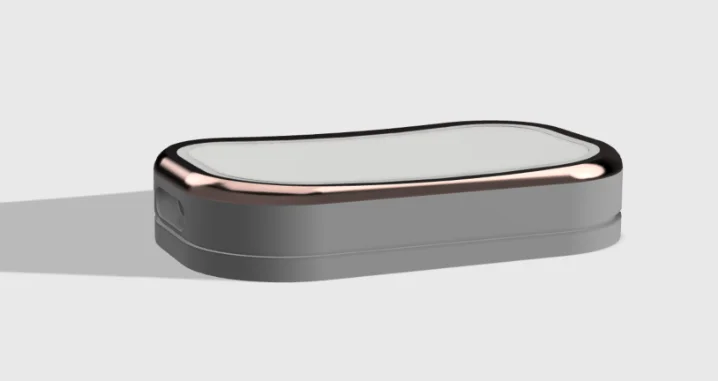
Rose gold
Metal bezel, premium tier.
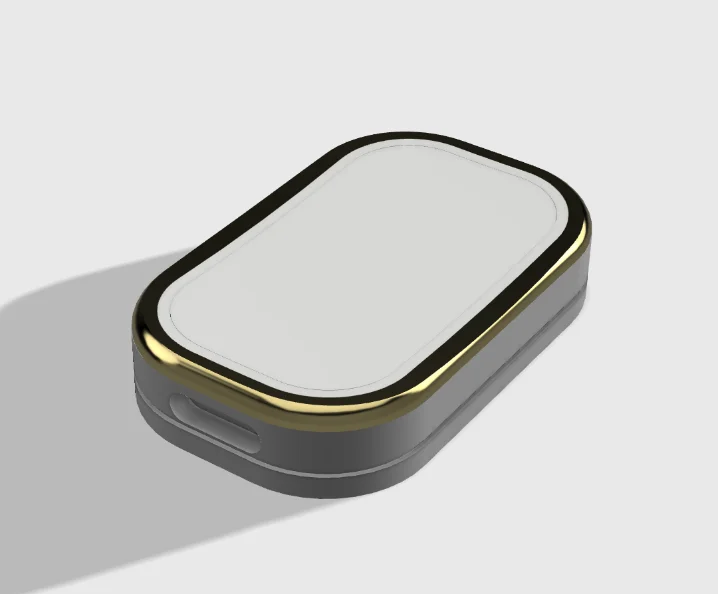
Gold
Metal bezel, premium tier.
The faceplate is designed to be factory-changeable, so the same certified core ships in finish variants. Chain options, with the breakaway retained, were the biggest aesthetic suggestion I heard, and an inexpensive way to increase compliance.
Carriers are where resident agency lives. Radios, battery, antenna and seal are designed once and certified once, then the carrier absorbs preference. Housing and silicone are only two to four dollars.
Brushed stainless bezel with an open window, so nothing crops the LED ring. Filleted breakaway loop, and a USB-C cutout so the device never comes out to charge.
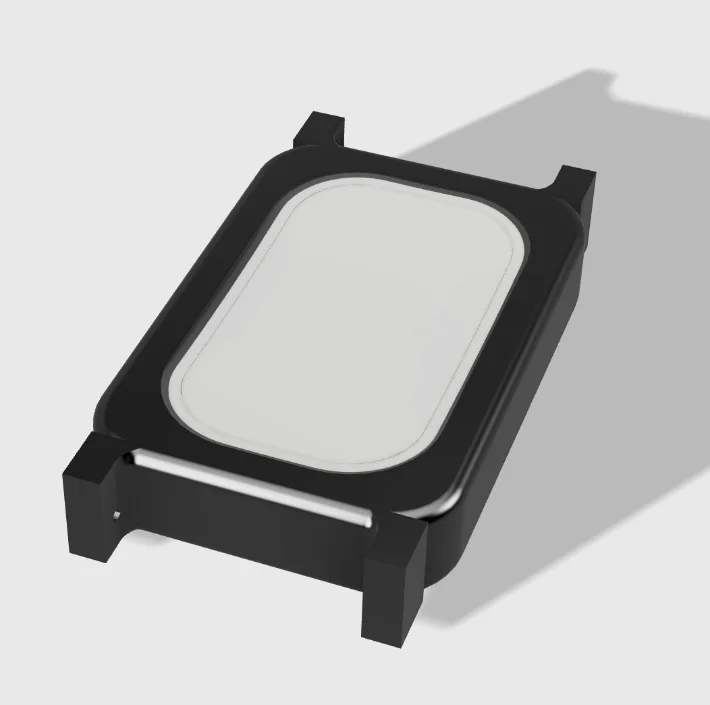
Standard 20 mm spring-bar lugs, so no custom band manufacturing at all. Worth keeping, but not worth leading with, and contraindicated for unilateral impairment.
The device slides in and lives securely on the belt, for residents who would rather not wear anything at the neck.